- Linear// ticket status
- GitHub// docs/features/*.md
- Agent// decision, timestamped
Your agents wrote the code. Nobody wrote down why.
Linear holds tickets, GitHub holds commits, and neither holds the reasoning. Stemmory is where that reasoning survives, as a side effect of work you were already doing.
From $24/month billed yearly. 14-day trial, card up front, cancel anytime in one click.
- Reads, doesn’t rewrite your tools
- Cancel in one click
Built on the tools you already use









Stemmory reads from these tools. Names and marks belong to their owners and do not imply endorsement.
A decision that isn’t recorded didn’t happen
When a large share of your code is written by agents, the code still arrives. The reasoning doesn’t.
The landing page shows a decision from the record, not written copy
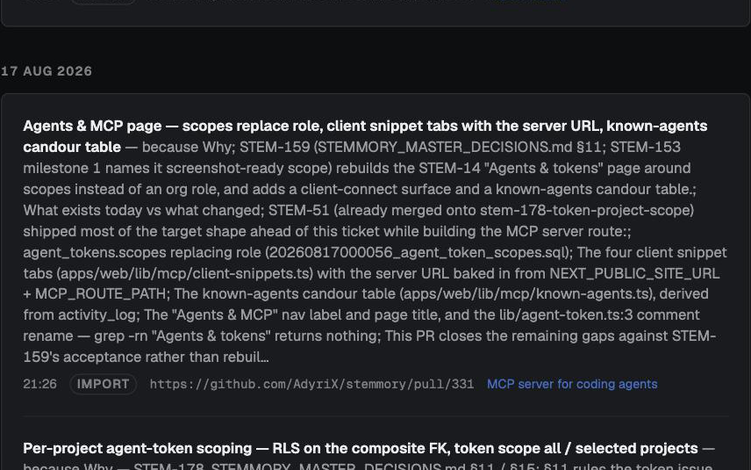
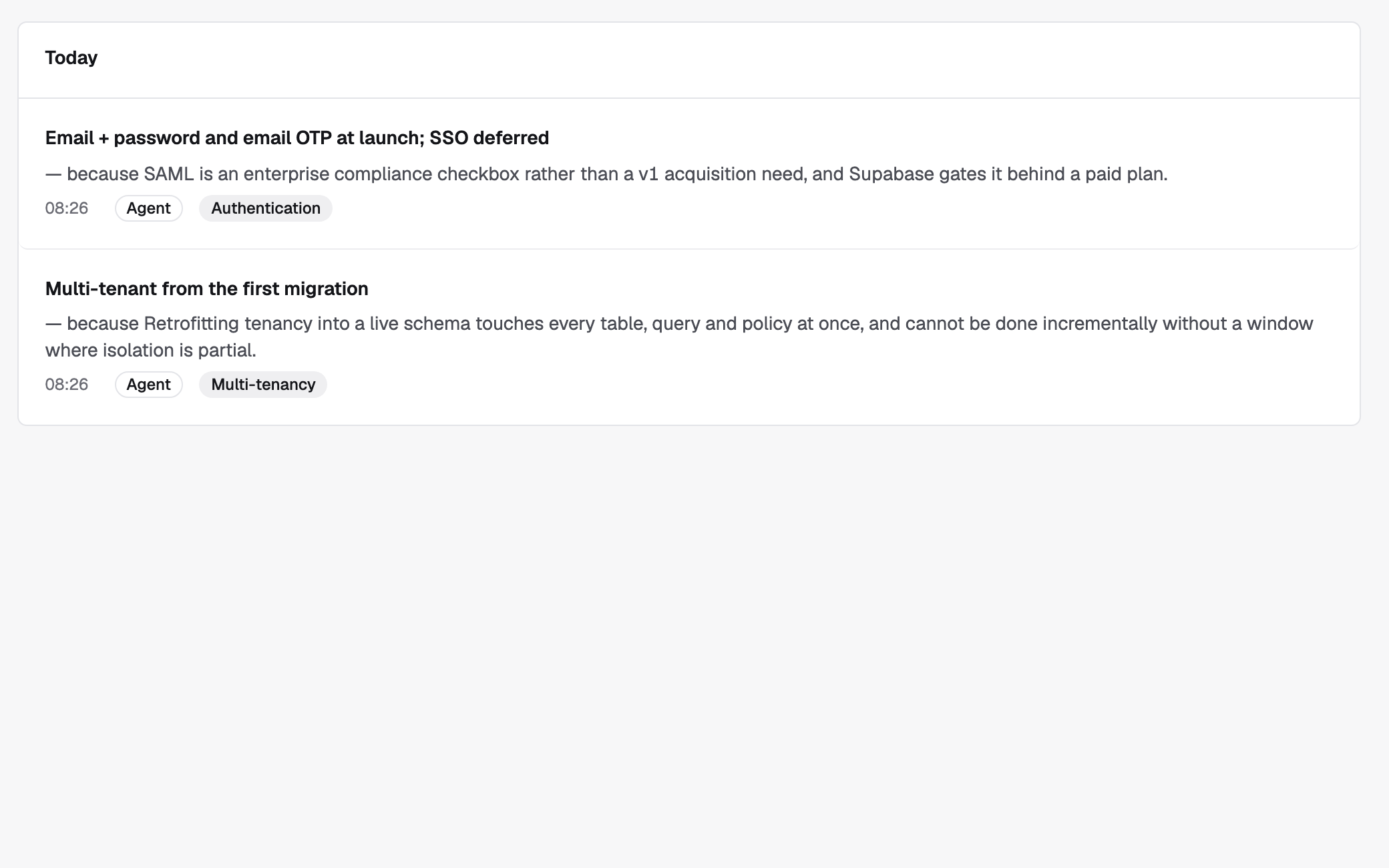
— because A page about capturing reasoning cannot open with reasoning someone made up. The "Why this exists" figure now quotes one real decision from this workspace, verbatim, with its timestamp.
Agent · Pricing page
- 01
Linear holds the tickets
It tracks work items: things in flight that will eventually be done. It has no place for a feature you decided on and haven’t started.
- 02
GitHub holds the commits
It records what changed, precisely, and nothing at all about why that change was the right one.
- 03
Nobody holds the reasoning
Six weeks later someone asks why authentication works the way it does, and the honest answer is that nobody remembers.
Set up once. Then stop maintaining it.
The whole point is that step three keeps happening without anybody doing it.
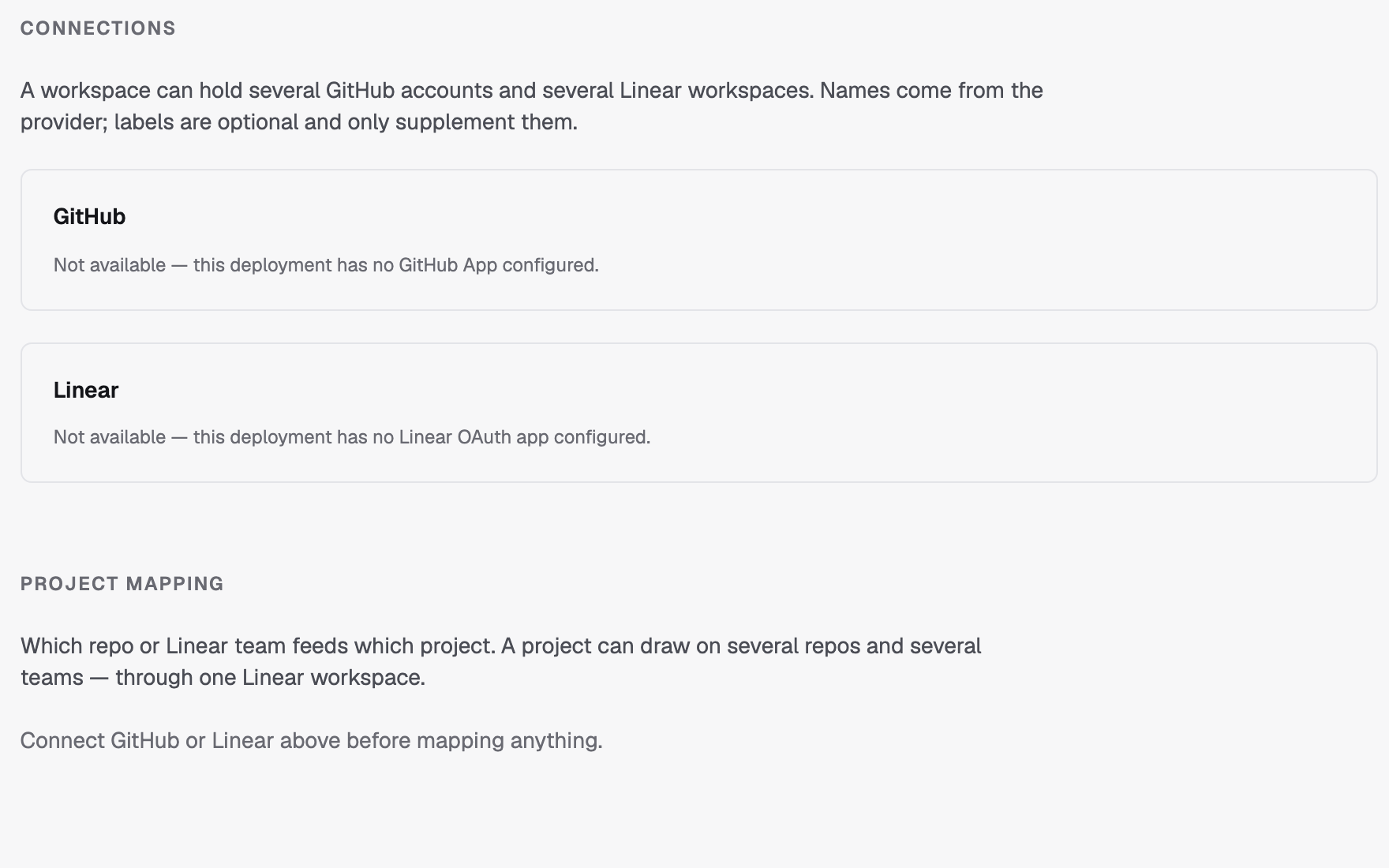
Connect Linear and GitHub
One OAuth click each. Stemmory reads your tickets and the
docs/features/*.mdfiles in your repos. It never writes to GitHub. The one thing it can write to Linear is a label —feature:<slug>— created in your team if it isn’t there yet, then added only to issues you confirm during setup, and only that.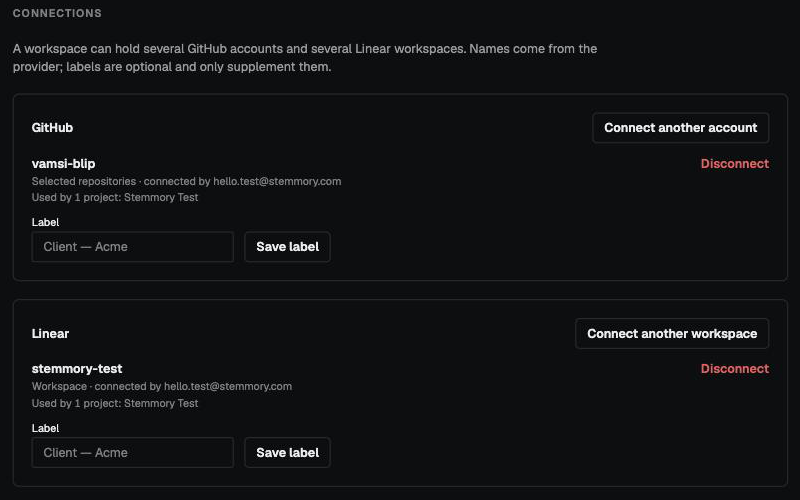
Your work becomes the graph
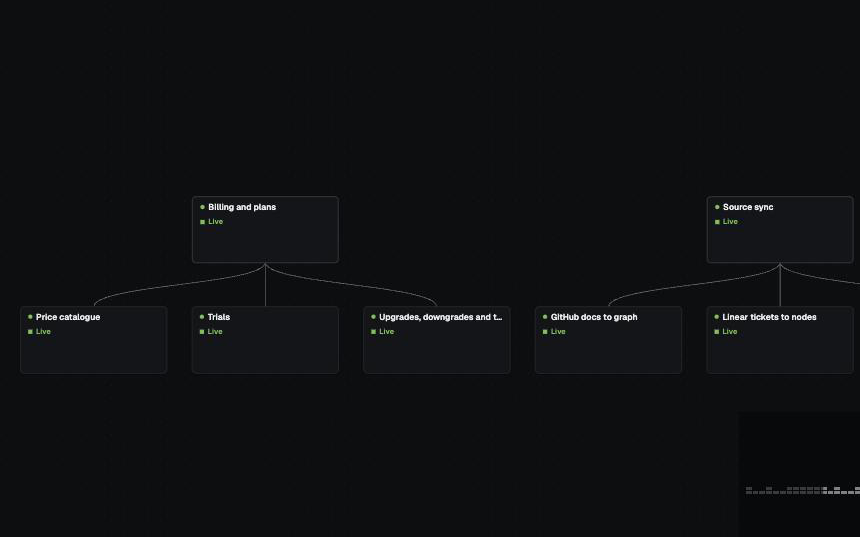
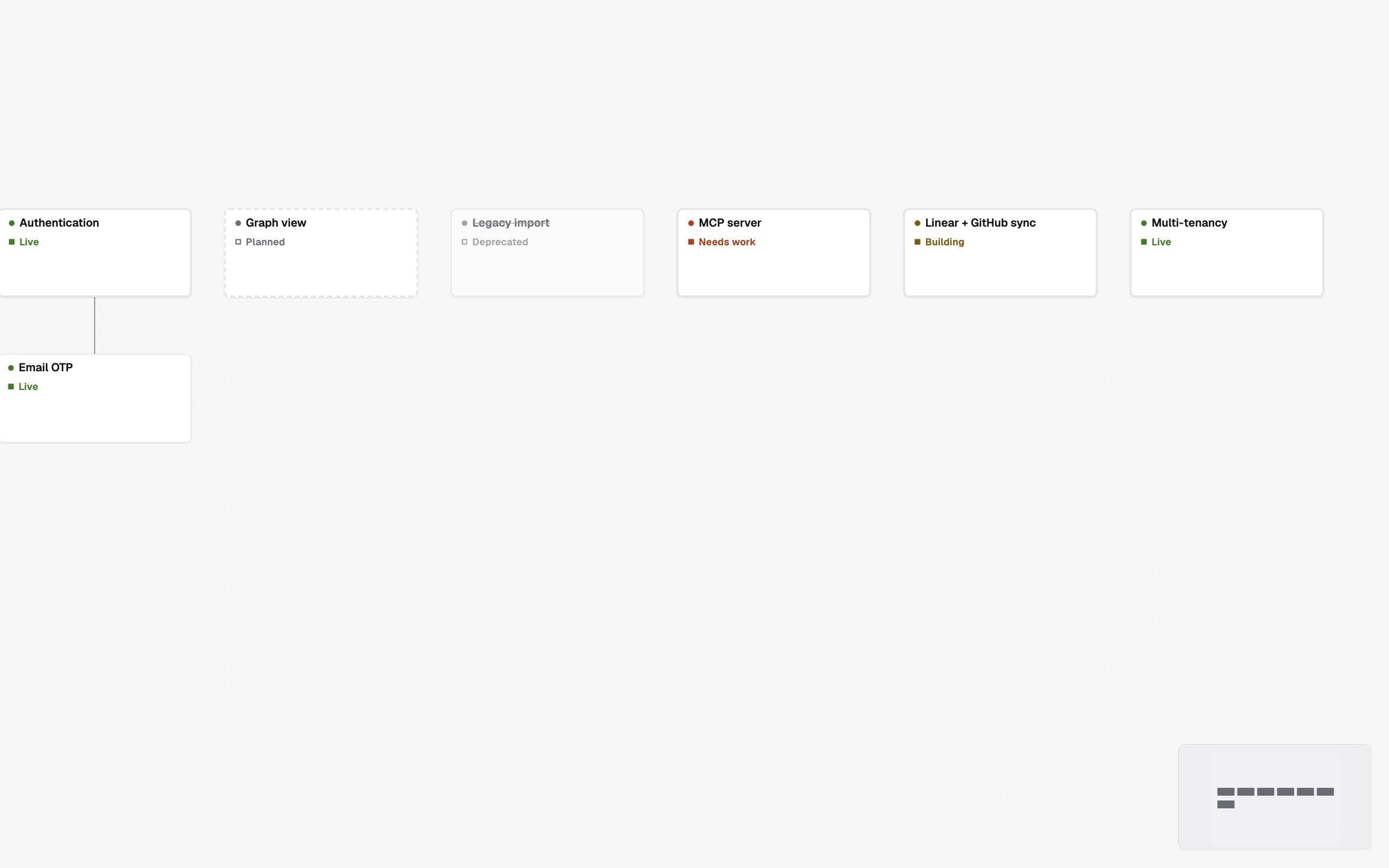
Every feature file is a node. Frontmatter sets its slug, title and parent; the first paragraph becomes the card excerpt. Linked tickets derive the status, so nobody types it in and nobody forgets to update it.
Your agents write into it
Issue an agent API key and your coding agents record decisions as they make them, attributed and timestamped. The record gets written while the reasoning still exists, which is the only moment it’s ever cheap to write.
- Reads GitHub and Linear. The only write is an opt-in Linear label you confirm
- One OAuth click per source, no tokens to paste
- Re-reads on demand, so the graph catches up with the repo without anyone editing it
Memory that maintains itself
Five things Stemmory does so nobody has to remember to do them.
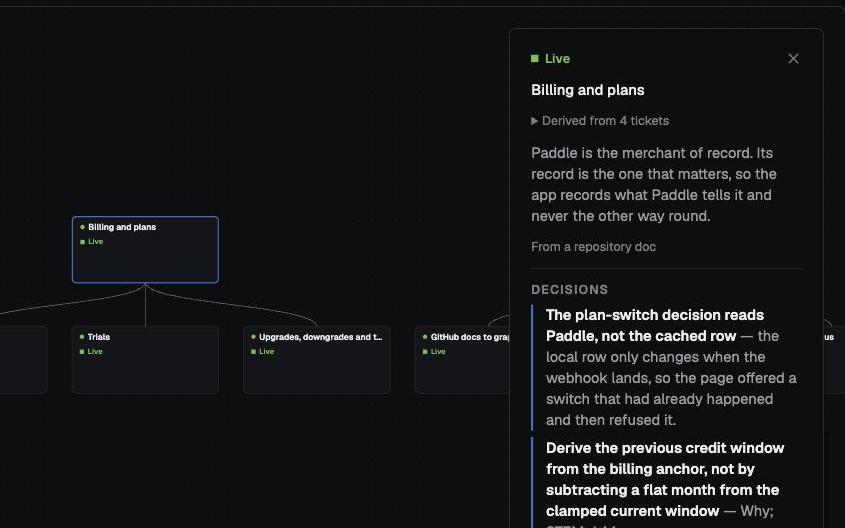
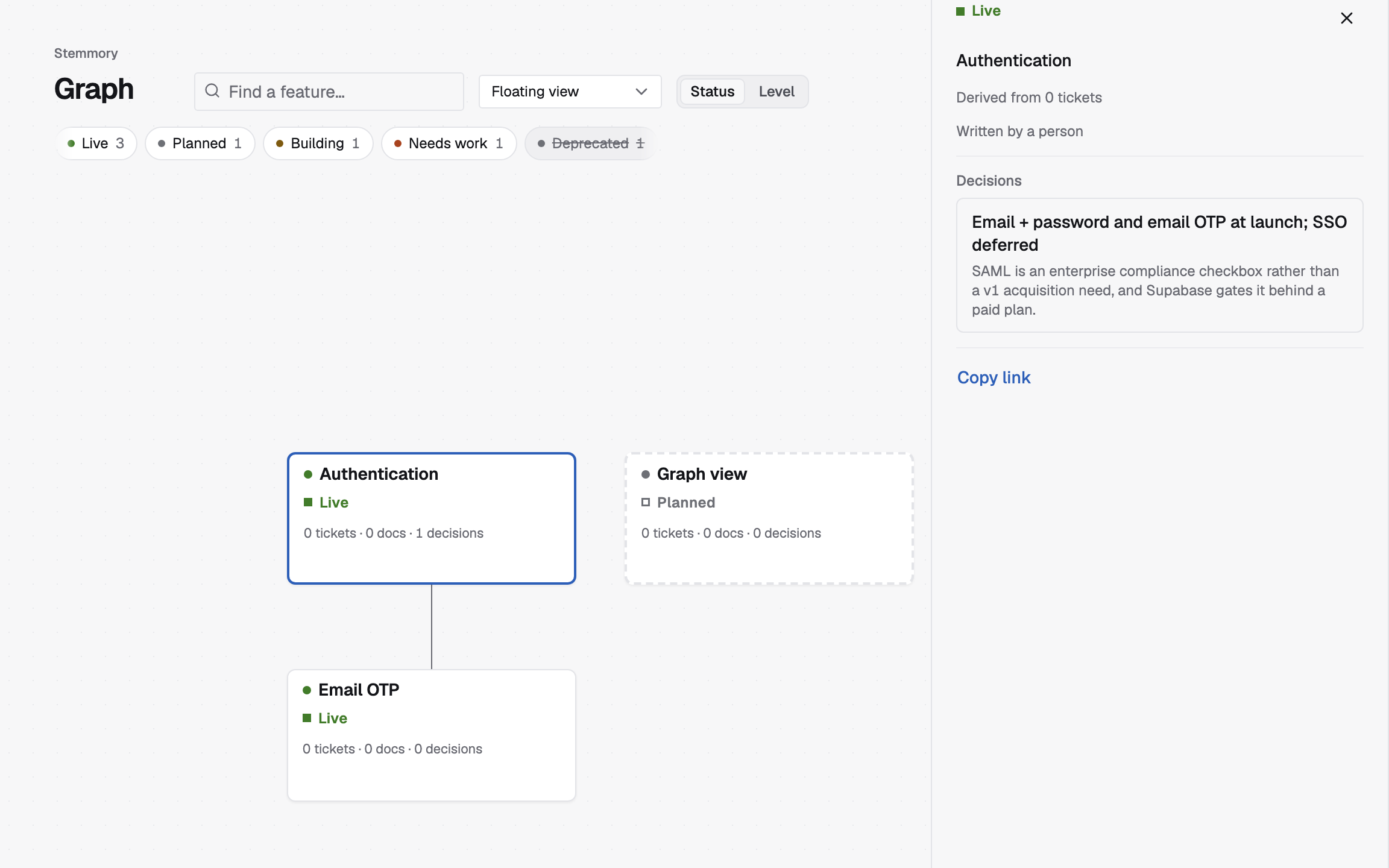
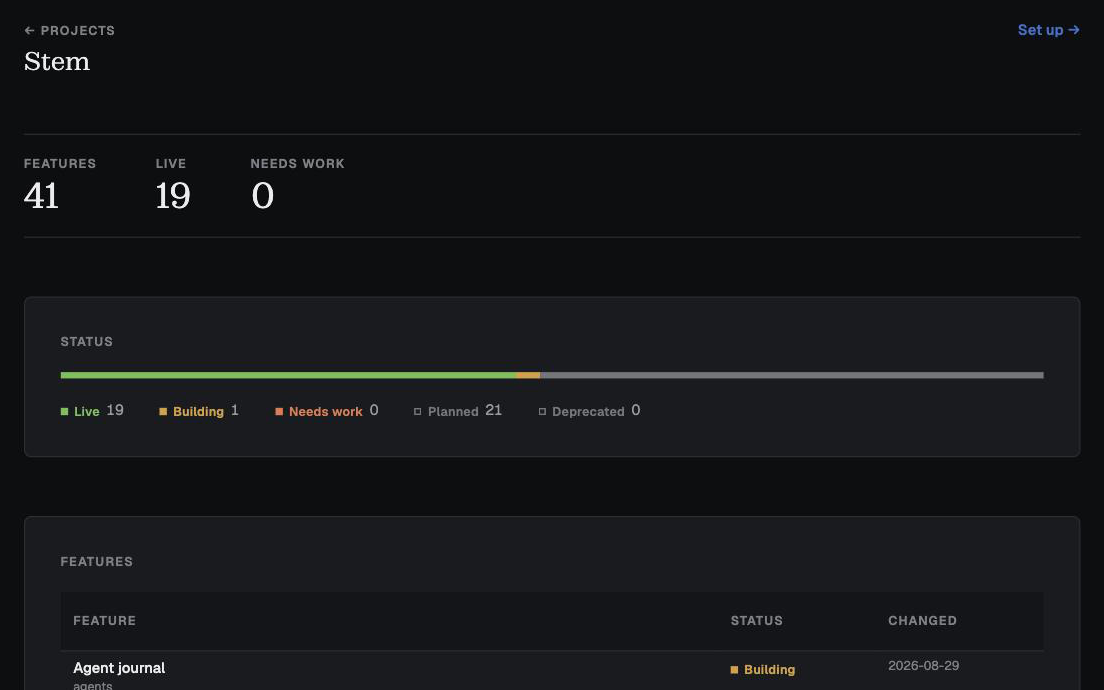
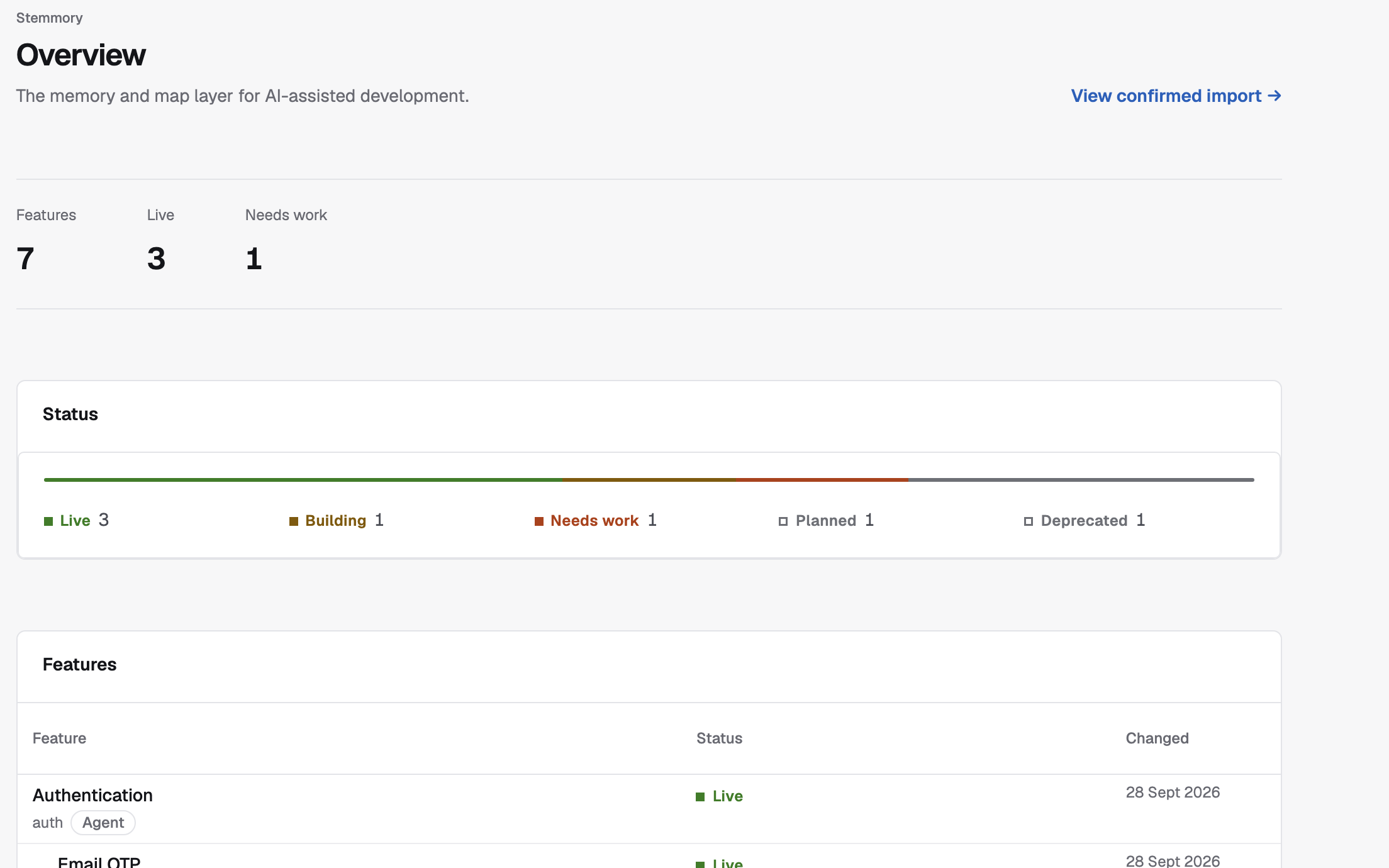
The feature graph
The whole tree of what a project is, including what you decided on and haven’t built.
Status you didn’t type
Derived from your tickets, not a field someone forgot to update.
Decisions that outlive the session
Append-only, with a reason attached, because a decision without one didn’t happen.
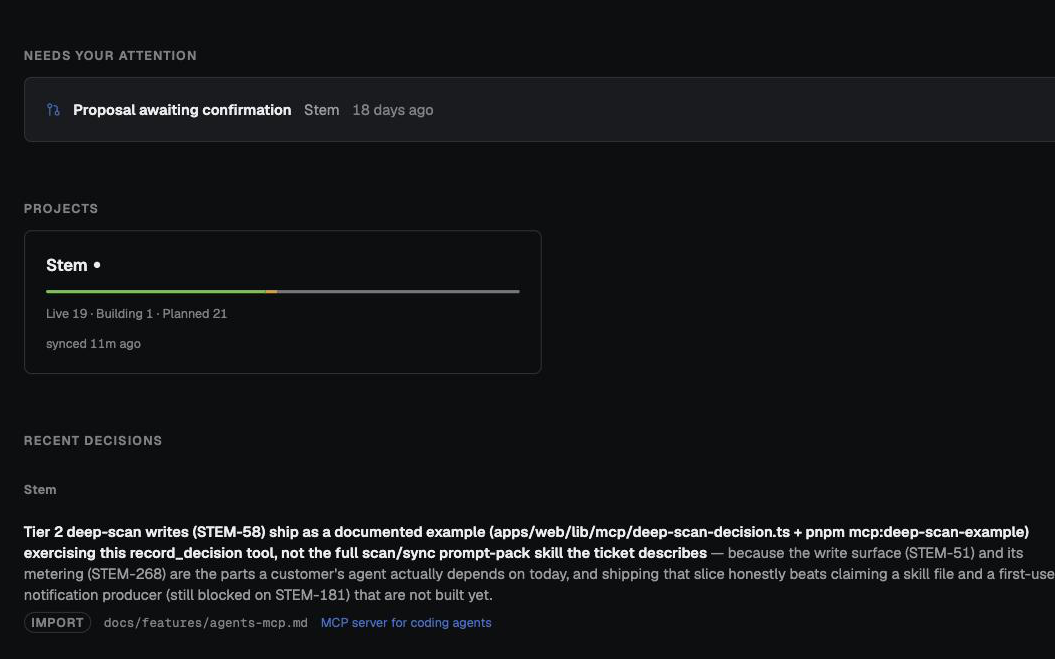
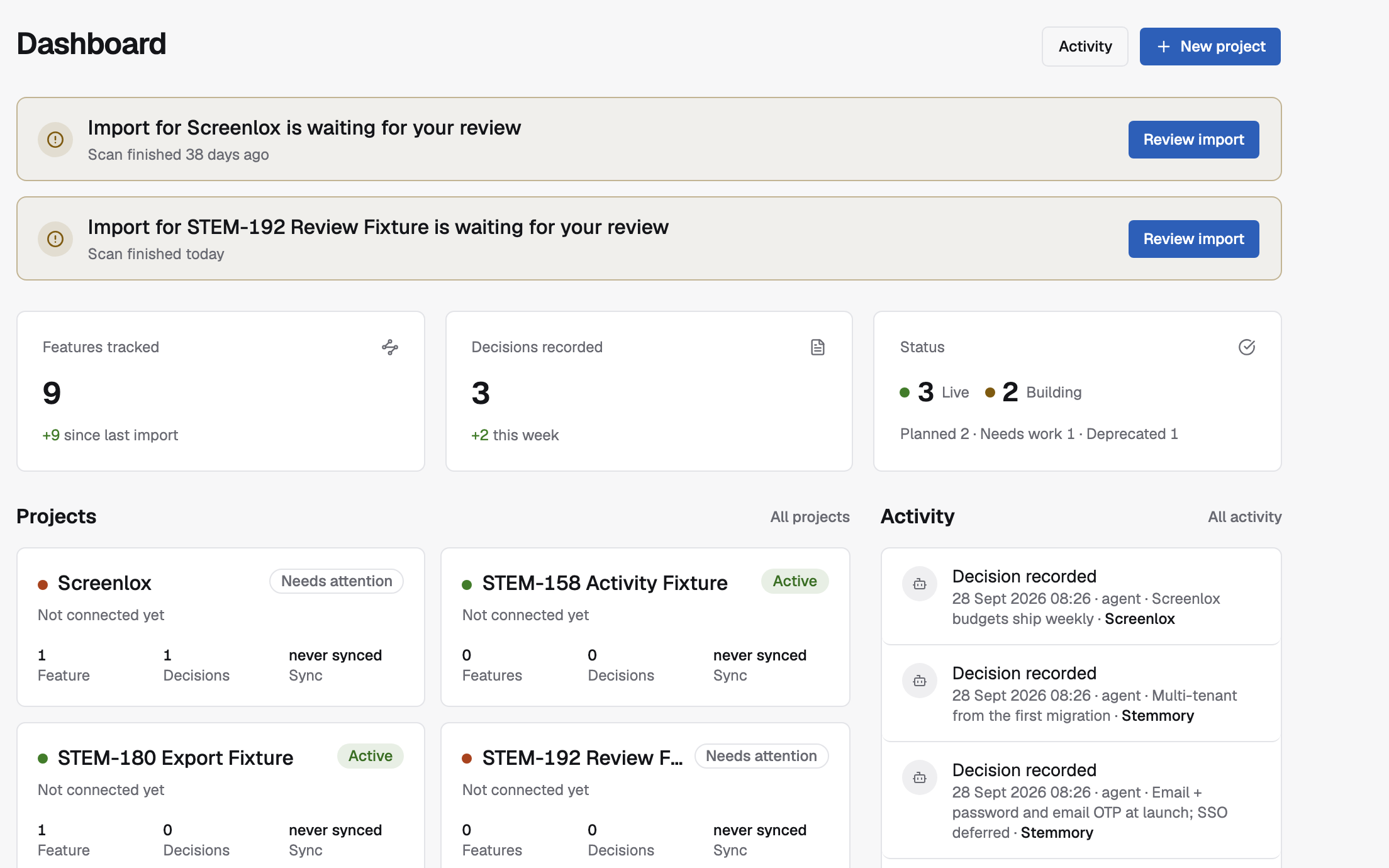
Agents write directly
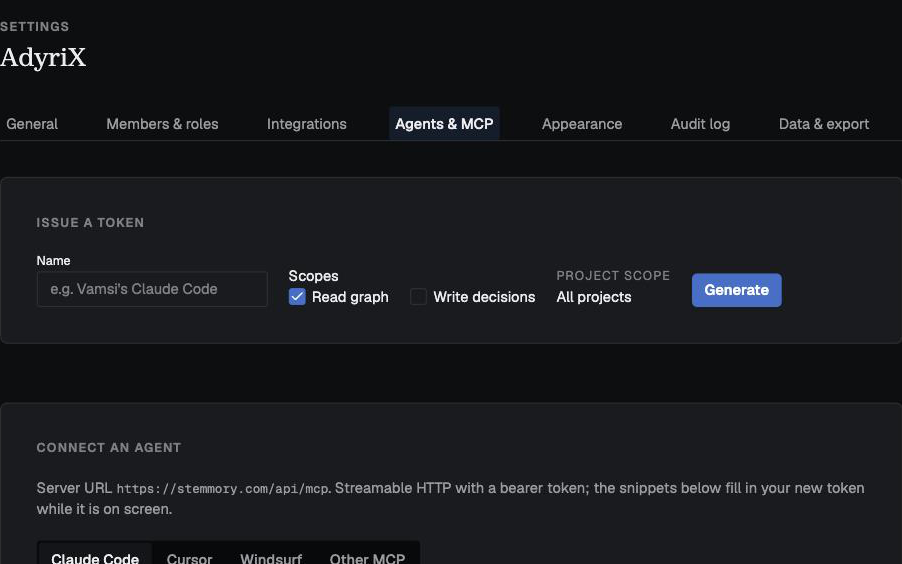
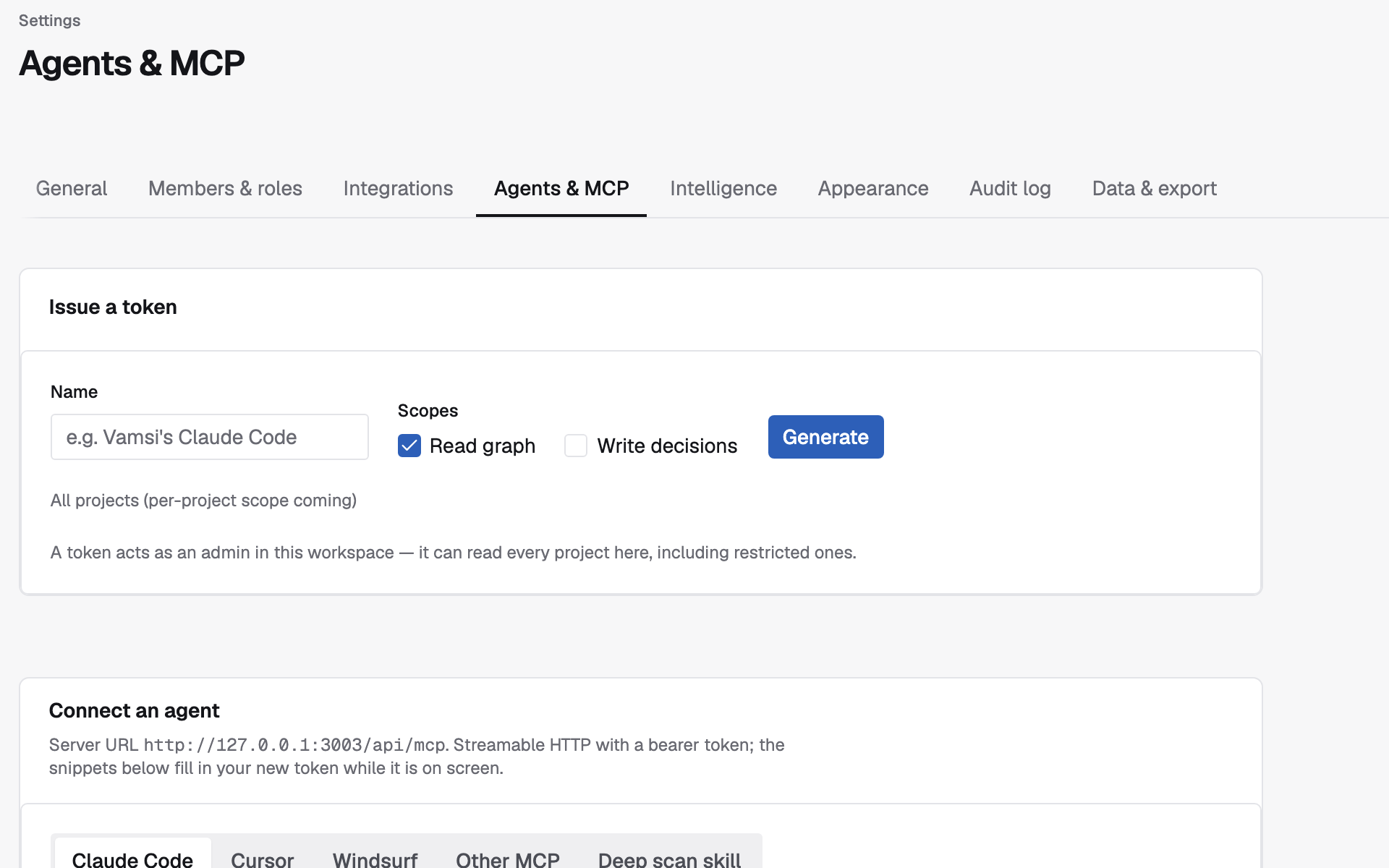
Scoped API keys, so your coding agents record as they work.
Audit log
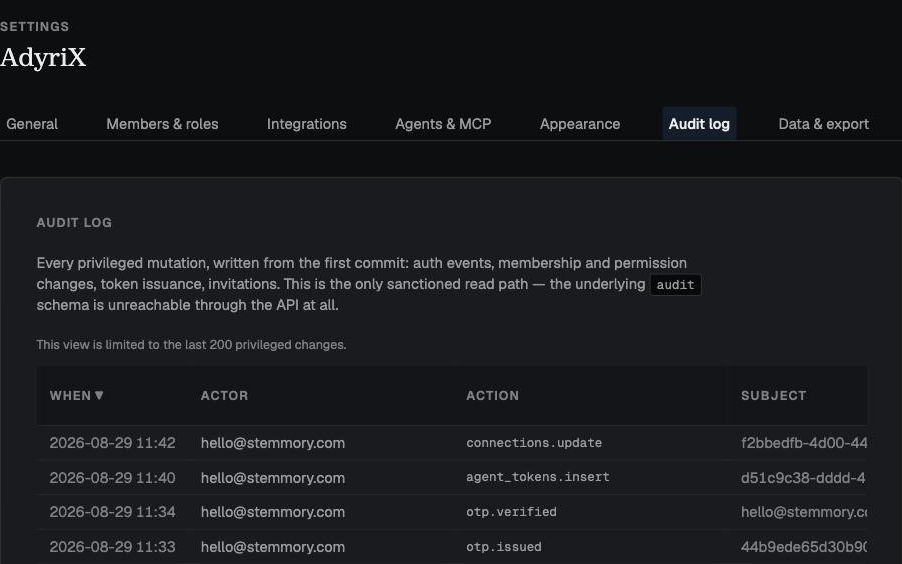
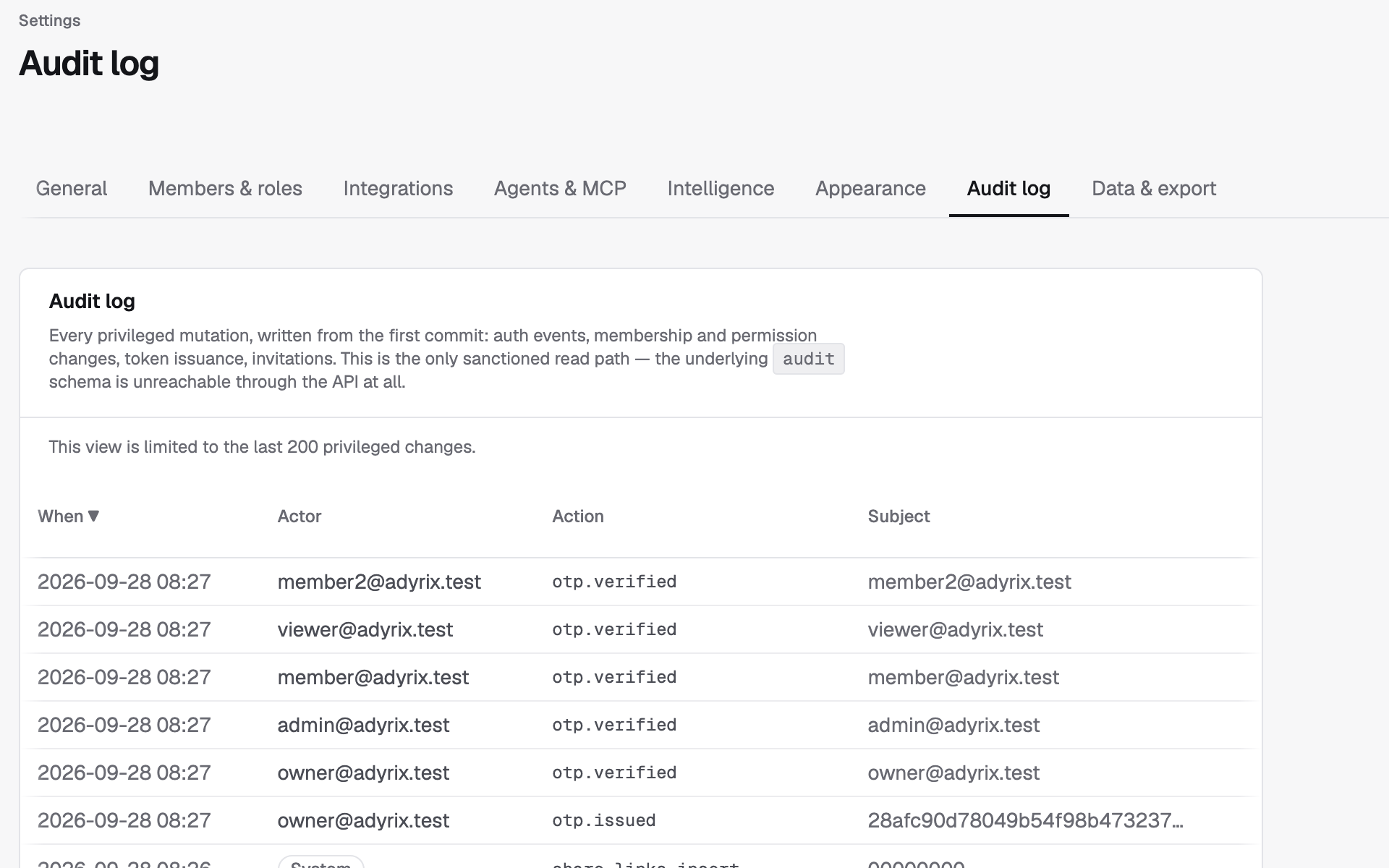
Every write recorded, so status you didn’t type is still status you can trace.
Built for people shipping more than one thing
If you only have one project and you wrote all of it yourself, you probably don’t need this yet.
Solo technical founders
A portfolio of shipped apps, much of it agent-written. You open this daily and show it to people, so it can’t embarrass you.
Engineering leads
20 to 50 people, and you have to justify the spend upward. The risk is recommending something that looks unserious.
Dev consultancies
You report status to non-technical clients. That’s the constraint that keeps this from turning into a terminal: a stranger in the room has to follow it.
“Why not just use what I already have?”
Everyone asks this, so it’s answered here rather than in a sales call.
- Linear
- Tracks work items. Stemmory tracks the system those items are changing, including features with no ticket. Stemmory reads from Linear rather than replacing it.
- A docs folder
- You have one and it’s out of date, because keeping it current is separate from doing the work. Stemmory parses those same files and derives status from your tickets.
- A Notion page
- Same failure mode, and nothing derives status for you.
- Asking the agent
- The agent’s context ends with the session. Stemmory is where it survives.
It doesn’t store your source files
Stated plainly because it’s the first thing a technical buyer checks, and because it’s a design constraint rather than a policy.
Metadata, not code
Stemmory reads markdown from a path you configure, plus your issues and pull requests. What it stores is the path, title, frontmatter, a short excerpt and the commit each document was read at. It does not store the files themselves. Only the documents under the path you configure are opened; the rest of the repository is listed by name and never fetched.
Row-level security
Every table is gated in Postgres itself, so a query can only ever return rows belonging to your workspace. Enforced by the database, not by app code that could forget.
Reads more than it writes
Stemmory never writes to GitHub. The one write it makes is a Linear label — feature:<slug> — created in your team if it isn't there yet, then added to the issues you confirm during onboarding; taking it back off them is one click. Outside that, connecting Stemmory cannot alter, close or comment on anything you depend on.
The full detail, including who processes what and where it is stored, is in the Privacy Policy.
Priced by what you run, not who reads it
One plan for one person and a handful of projects, one for a small team shipping across many. Editors pay. Viewers never do.
Portfolio
Most chosenA small team shipping across many projects.
$66/mo
$790 billed yearly
Start free trialSome features are still being built. See what's live today.
What people ask first
Stemmory is early and built by one person. These are the questions that come up before anything else.
A living map of what you've built. It holds a feature graph for each project, which is the tree of what the system is rather than the list of what's currently in flight, and it attaches the status, the tickets, the docs and the decisions to each node.
It reads from Linear and GitHub, and your coding agents write into it directly.
Two changes, both small. Feature descriptions live in docs/features/*.md in your repo, one file per node, with a few lines of frontmatter. And your agents need an API key to write decisions.
Tickets, commits and reviews all stay exactly where they are.
Stemmory reads the markdown files in the path you configure, plus metadata from Linear, and stores what they yield — titles, frontmatter and short excerpts — not your source files, which it never stores. One caveat, stated plainly: reading any repository file uses GitHub's contents-read permission, which technically can read other files too, so the guarantee we stand behind is about what we store. The privacy policy spells this out.
One click on your subscription page inside the app. No email, no support ticket, no retention call.
Paid access runs to the end of the period you've already paid for. After that the workspace goes read-only rather than away: the graph, the decisions and the journal stay there and stay readable, and sync stops. You can undo a pending cancellation any time before it takes effect.
Being specific, because publishing it is the fair thing to do. The MCP server reads the graph and writes decisions — decisions only. Agents cannot create features, change statuses or edit anything through it. A token can be limited to the projects you choose, but inside that limit it acts as an admin: it reads restricted projects there too. Scope the token; project access is about people, not machines.
There's a dashboard that opens after sign-in, with rows for what needs attention and decisions from across the workspace, plus an activity feed for the workspace and for each project.
Stemmory is built by one person, and is early. That's a real limitation, and it also means a well-argued request reaches the person who writes the code.
The product is sold by Adyrix Systems Private Limited through Paddle. Support goes to support@stemmory.com and is answered by the person who built it.
Queries and grievances
Venkata Vamsi Krishna Bhuvanam, Founder and Grievance Officer — vamsi@stemmory.com. Complaints are acknowledged within 48 hours and resolved within one month.
Start with one project.
Connect a repo. Watch the graph appear. No import, no migration, no setup call — Stemmory reads what your project already contains.